
National-scale iris and fingerprint identification
Neurotechnology announced MegaMatcher Accelerator 4.0, the latest update of the company’s multi-biometric software and hardware solution for high-volume, high-speed fingerprint and iris identification.
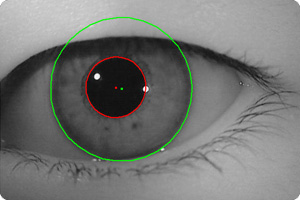
The software includes a larger database capacity, enhanced fault tolerance and a new matching algorithm that provides even greater accuracy, with extremely fast matching speeds of up to 100 million fingerprints per second – with a tolerance of 360 degrees of fingerprint rotation – and up to 200 million irises per second.
Even at these high speeds, MegaMatcher Accelerator performs a full database search for each match (unlike systems that use internal database indexing or pre-classification). This eliminates potential false rejections from incorrect classifications and gives MegaMatcher Accelerator a very high degree of reliability.
MegaMatcher Accelerator 4.0 provides fast, accurate multi-biometric identification using both fingerprint and iris modes together, or either mode can be used as a primary form of identification. It can also check identification results with other biometric data from any Neurotechnology-supported modality, including face, palmprint or voice identification.
It can manage a database of up to 40 million fingerprints and 50 million irises with the Extended version and up to 4 million fingerprints and 5 million irises with the Standard version.
For even higher volume applications, multiple MegaMatcher Accelerators can be connected in a cluster to manage databases with billions of records.
The new fingerprint algorithm offers even higher reliability than the previous version: at the same False Acceptance Rate (FAR) level, the False Rejection Rate (FRR) is up to three times smaller.
The software does not require flushing – a specific procedure that periodically pauses the processing of identification requests to optimize internal data structures. By eliminating the need for flushing, it can operate without pauses, further enhancing overall speed and efficiency.